
Parts of Seville Cathedral
A tour of the most important spaces in the building: from the former minaret of the mosque to the Royal Chapel and the tomb of Christopher Columbus.
The Giralda
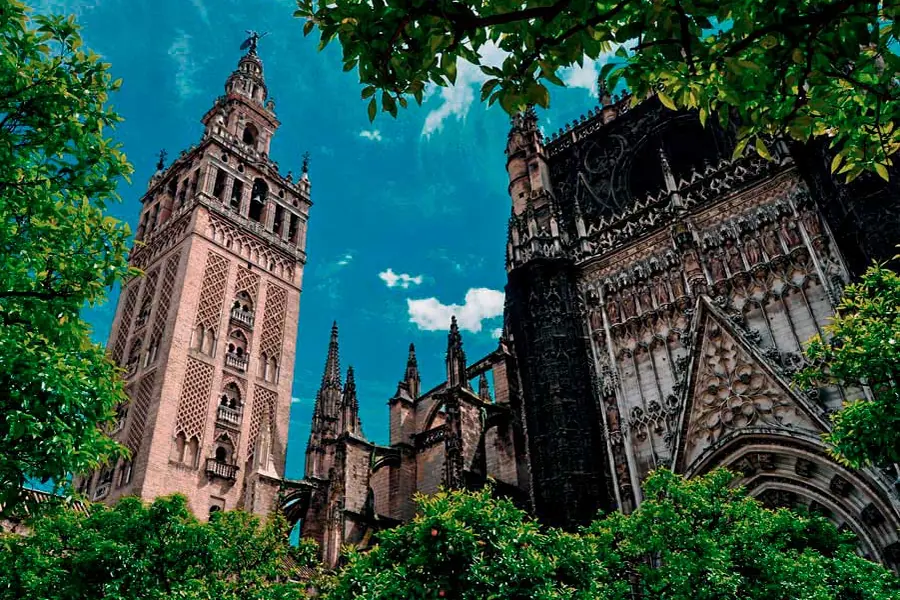
Despite standing on its own, the Giralda is the tower and bell tower of the Cathedral. It stands out for its history, its architecture, the role it has played over the centuries and its place in the old town. Its square base, 13.61 metres on each side, is 7.12 metres above sea level, and it reaches a height of 104.06 metres.
Its base was built in the image and likeness of the minaret of the Koutoubia Mosque in Marrakesh (Morocco), although the top section and the belfry are of European Renaissance origin. You climb it by ramps, with 17 steps in the last section.
The central nave
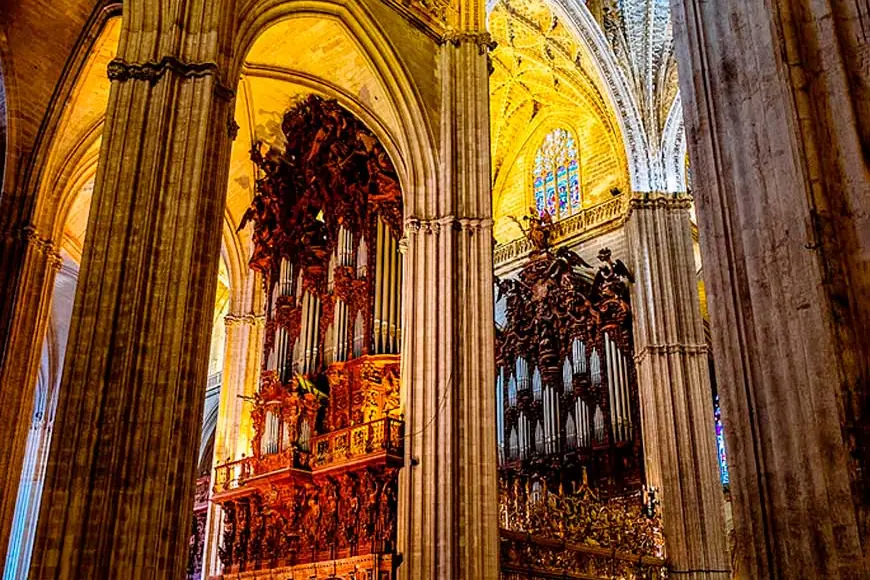
The impressive central nave houses two great ensembles: the choir, flanked by great organs, and the four-storey Capilla Mayor, with the main altarpiece. Between them are three areas: the nave of San Fernando Rey, the transept —with the highest vaults in the whole complex— and the trascoro (the space behind the choir). They correspond to the three hierarchies of the medieval city: the royal cathedral or pantheon of the kings, the ecclesiastical cathedral, reserved for the archbishop and the Chapter, and the people's cathedral, towards the west.
The Royal Chapel
The Royal Chapel forms the east end of the Cathedral. It is a unique construction: a kind of Renaissance apse where you would expect a large pointed ambulatory, typical of Gothic architecture. It holds the pantheon of King Saint Ferdinand and his son Alfonso, together with the tombs of other members of the royal family of the time, and the Gothic image of Santa María de los Reyes, patron saint of the archdiocese of Seville.
The treasury and the art gallery
Highlights include the church's treasures and a large number of paintings by Murillo, such as the portraits of Saint Isidore and Saint Leander; paintings such as Zurbarán's Saint Teresa; and the sculpted head of Saint John the Baptist.

The tomb of Christopher Columbus
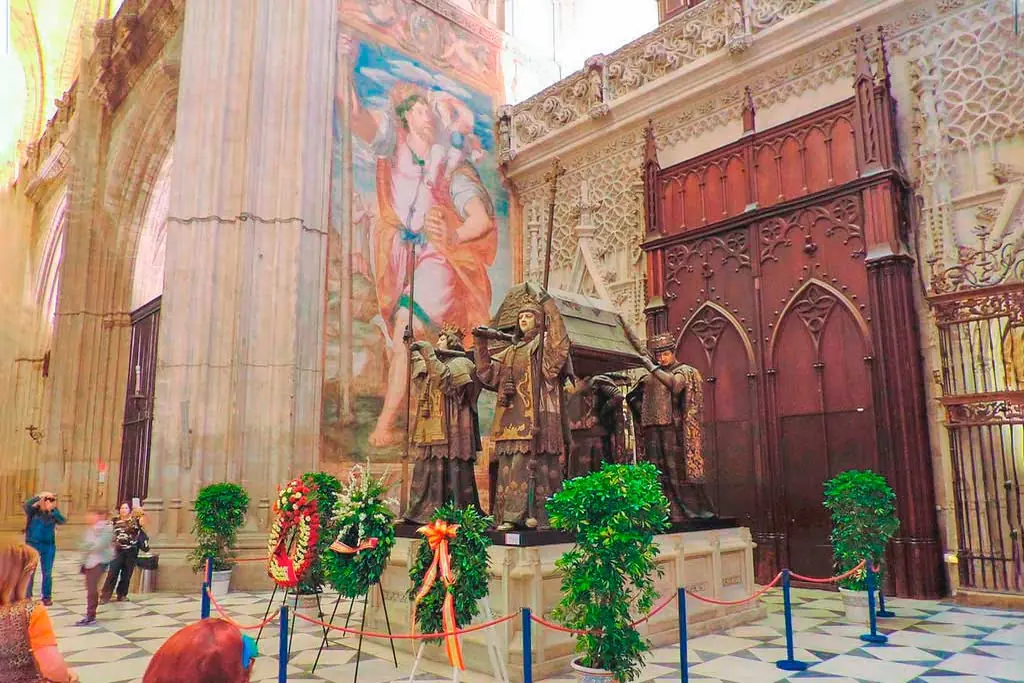
The mausoleum of Christopher Columbus, the work of Arturo Mélida, is in the right arm of the transept. The remains of the discoverer of America rest there.
The Courtyard of the Orange Trees
Besides the minaret, the Courtyard of the Orange Trees (Patio de los Naranjos) survives from the former great mosque.
To find your way inside the building, see the maps and plans.